Cargo Jeans Manufacturing Around One Pocket Block
Cargo jeans from 300 pcs in 13.5–14.5 oz denim: bellows pockets, gussets and bar-tacked corners on a pocket block we keep on file.
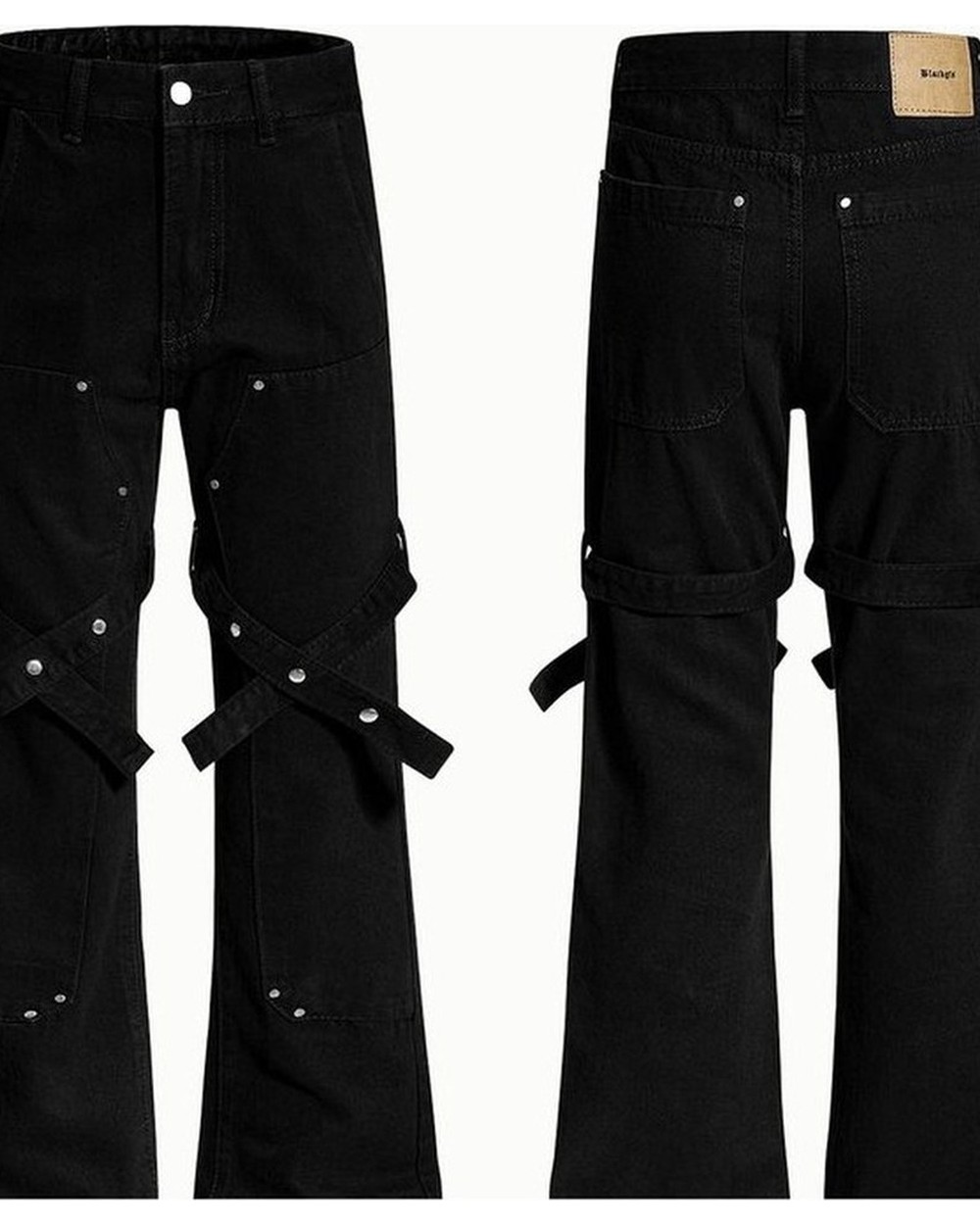
Cargo jeans are a pocket engineering problem. A bellows pocket, a gusset and a hammer loop add 4–6 minutes of sewing per pair, and every stress corner needs a bar tack or it tears at the first squat.
We cut cargo in 13.5–14.5 oz rigid cotton, with 2% elastane if you want movement. The pocket block is developed once, kept on file, and reused for every color and wash in the program.
- 13.5–14.5 oz rigid, or 2% elastane for stretch
- Bellows pockets with a gusset and bar-tacked corners
- Pocket block kept on file after the first sample
- 300 pcs per style per color, 7–10 day sampling
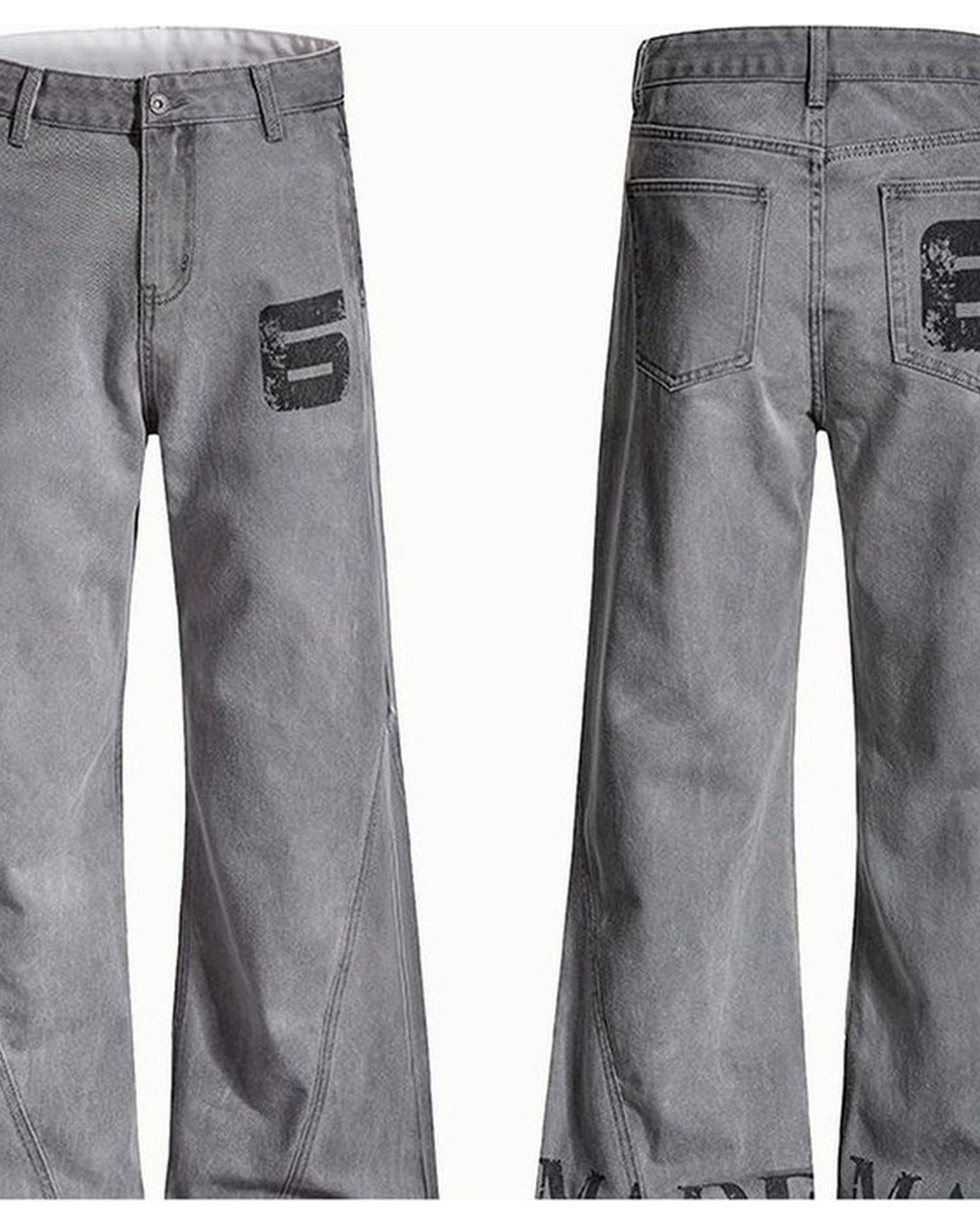
A cargo pocket is six pattern pieces: face, bellows side, flap, flap lining, pocket bag and reinforcement. Changing the pocket size means a new block and a new sample; changing the color or wash does not.
The gusset is the part buyers underestimate. It gives the bellows its depth, usually 3–5 cm, and without a bar tack at each corner the pocket tears away from the side seam under load. We bar tack 28 stitches at four points.
- Bellows depth 3–5 cm, gusset bar-tacked at 4 corners
- Pocket top edge 10–12 cm below the waistband
- Flap with a hidden snap or Velcro, your choice
- Reinforced pocket bag in 10 oz twill
One block, three lengths, the same pocket construction.

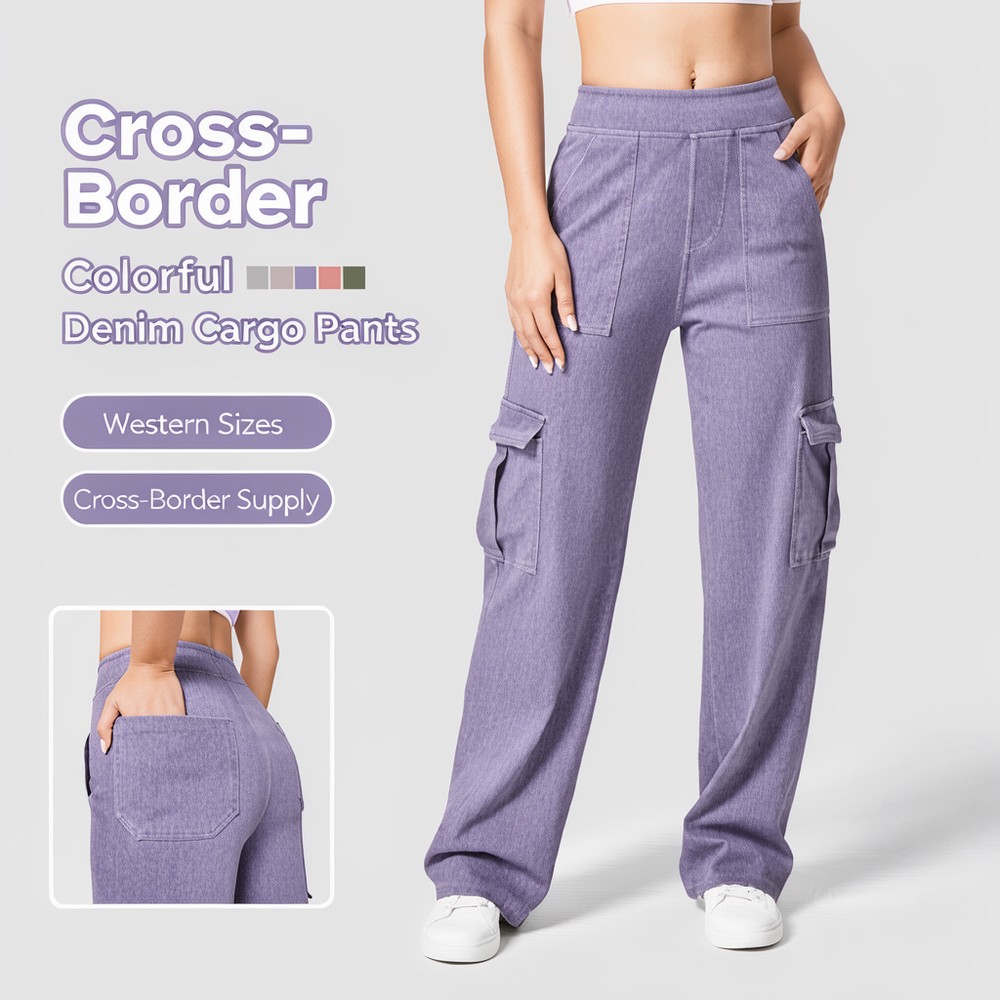

Cargo needs weight to hold the pocket shape. Below 12 oz the bellows collapse after a wash and the pocket reads flat in photos. Above 14.5 oz the seam bulk at the side is hard to control on a 6 mm flat-fell, and the garment becomes jacket-weight.
Shrinkage is the number to watch. A 14 oz rigid cargo can lose 3% in the warp after the first wash, which moves the pocket 1 cm up the leg. We pre-shrink the fabric or cut the pattern with the allowance built in.
- 13.5–14.5 oz rigid, 2% elastane optional
- Pre-shrunk fabric or a 2–3% warp allowance in the pattern
- 6 mm flat-fell side seam, Tex-105 thread
- Bar tacks at pocket corners and belt loops
For a new bellows pocket on an existing block, 1,200 pcs across three colors.
01 — Pocket block and spec
Pocket dimensions, bellows depth and placement confirmed against your reference. 2–3 days.
02 — Pattern and first sample
Block cut and sewn in your fabric weight; pockets set and bar-tacked. 3–4 days.
03 — Fit and stress test
Wear test with a loaded pocket, squat and seam strength checked. 2–3 days, so 7–10 days total.
04 — PP approval
Approved sample, wash standard and pocket placement sealed with the order. 2 days.
05 — Bulk
Cutting, pocket sub-assembly, sewing, washing and finishing. 25–35 days.
Held on every cargo order and checked on the washed sample, not the greige.
- Fabric weight: 13.5–14.5 oz rigid; 11–12.5 oz with 2% elastane
- Pocket block: 6 pieces: face, bellows, flap, lining, bag, reinforcement
- Bellows depth: 3–5 cm
- Bar tacks: 28 stitches at 4 pocket corners
- Side seam: 6 mm flat-fell, Tex-105 thread
- Placement: Top edge 10–12 cm below the waistband
- Shrinkage: 2–3% warp after the first wash
- Wash options: Rinse, stone, enzyme, overdye, tint
- Sizes: 28–46 waist, graded on the cargo block
- MOQ: 300 pcs per style per color
- Sampling: 7–10 working days
- Bulk: 25–35 days after PP approval
The cargo cost is in the minutes
A cargo pocket costs sewing time, not much else: 4–6 extra minutes per pair against a patch pocket, plus the bar tacks and the flap. On a 1,000 pc run that is 70–100 operator hours, and it is why a cargo jean quotes higher than a five-pocket at the same fabric weight. The pocket sub-assembly also needs its own operator, so scheduling matters as much as the minutes. The pocket is also where a first order slips a week, because that sub-assembly line has to be balanced against the main line.
The trade-off is weight against versatility. A 14.5 oz cargo holds its shape and photographs like a workwear piece, but it ships heavy and washes slowly. A 12.5 oz stretch cargo moves better and costs less to ship, and the pocket needs a stiffer interlining to stop the bellows collapsing. Neither is wrong; the market decides.
- Workwear and streetwear: 14–14.5 oz rigid, bar-tacked, pre-shrunk.
- Summer and travel: 11–12.5 oz stretch with interlined bellows.
- First order: one pocket block, three colors, 300 pcs each.
What is the minimum order for custom cargo jeans?
300 pcs per style per color, with sizes mixed freely within a color at 12 pcs per size. The pocket block is developed once and kept on file, so the second color does not repeat the block cost or the sampling round.
How much sewing time does a cargo pocket add?
4–6 minutes per pair over a standard patch pocket, including the bellows, flap and four bar tacks. On 1,000 pcs that is 70–100 operator hours, which is the main reason a cargo jean quotes above a five-pocket at the same fabric weight.
Can you copy a cargo pocket from a photo?
A photo sets the look, not the pattern. Send the garment or a measured sketch with pocket width, depth and bellows depth; we cut a block and sample it in 7–10 days. Without those three measurements the pocket usually samples too shallow or too wide.
What fabric weight do you recommend for cargo jeans?
13.5–14.5 oz rigid for workwear and streetwear, because the bellows holds its shape after washing. For summer or travel, 11–12.5 oz with 2% elastane moves better, but the pocket needs interlining or it collapses flat. Tell us the market and wash plan with the brief, and we confirm the weight against both.
Do cargo jeans shrink?
A 14 oz rigid cargo can lose 2–3% in the warp on the first wash, which lifts the pocket about 1 cm. We either pre-shrink the fabric or build the allowance into the pattern, and we check the washed sample before bulk rather than the greige.
Tell us what you want to make
Share the style, target quantity and launch date. You get fabric options, wash recommendations, a sampling date and a factory-direct quote — usually within 12 working hours.